When Zimbabwean Theatre Speaks, We Listen
A PERSONAL REVIEW OF THE AFRICA VOICES NOW FESTIVAL 2025
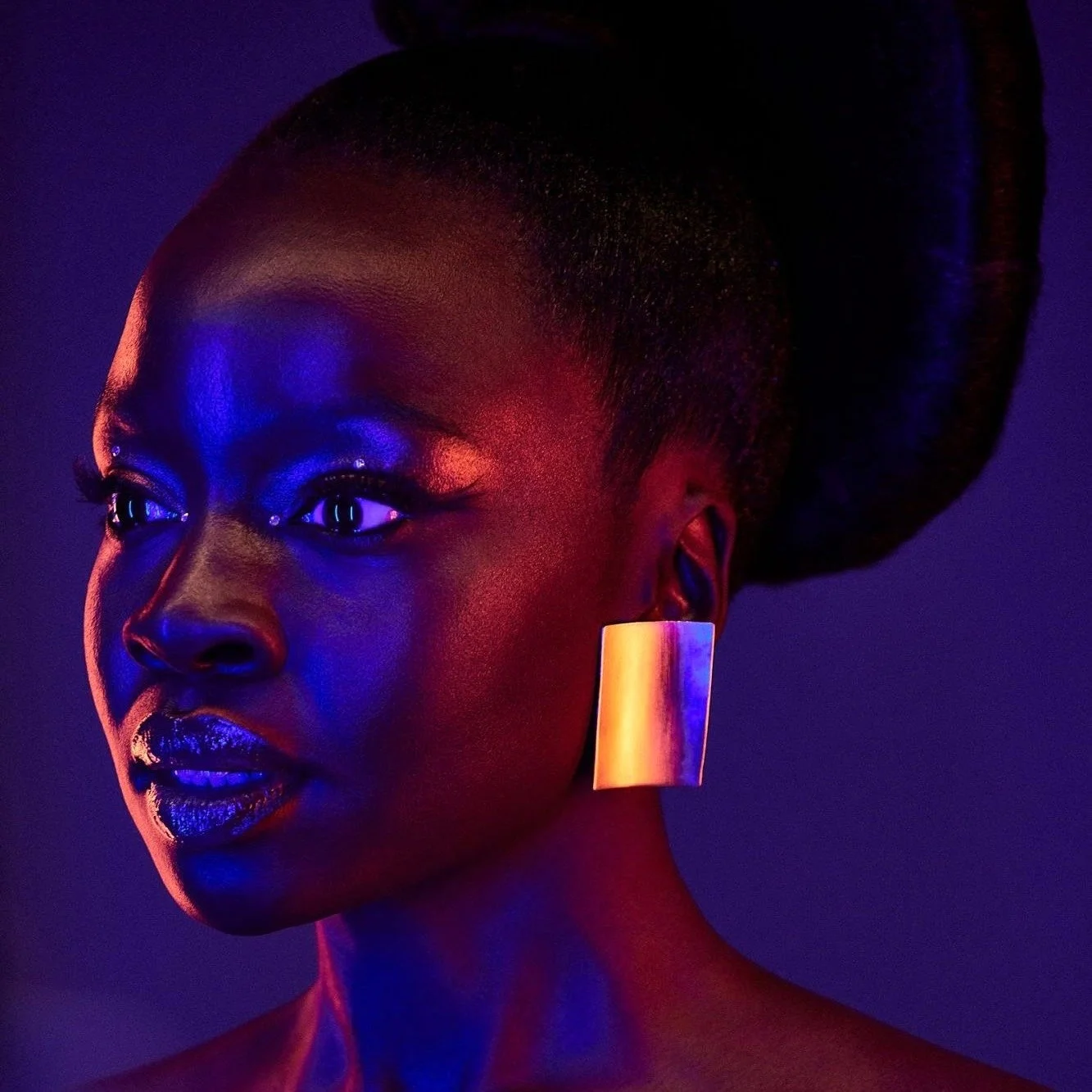
© Dennis Leupold for EntertainmentWeekly
Founded by Zimbabwean-American playwright and actor Danai Gurira, Almasi Collaborative Arts exists to develop African stories and storytellers through mentorship, rigorous craft and bold theatrical production. Its work sits at the intersection of art and social inquiry, using theatre as a space for reflection, dialogue and healing.
My first encounter with Almasi Collaborative Arts was back in 2024, when I attended the staged reading of Batsirai Chigama’s play Can We Talk? at Reps Theatre. It wasn’t the full production - just a reading - yet it was AMAZING. One of those moments where you leave the theatre wondering how the playwright’s words carried by the cast, held the audience captive with nothing but language and presence.
When I learnt that this very play, along with two others, would be fully staged at the Africa Voices Now Festival between October and November 2025, my excitement was embarrassingly loud. I generally love the arts - theatre, poetry, live music, anything local. I love seeing Zimbabwean talent shine. I also remain permanently in awe of actors who memorise pages and pages of dialogue and then deliver it with soul. Actual tears, actual breath work, actual emotional commitment - all in a live performance.
It’s genius, if you ask me.
A Festival That Dared
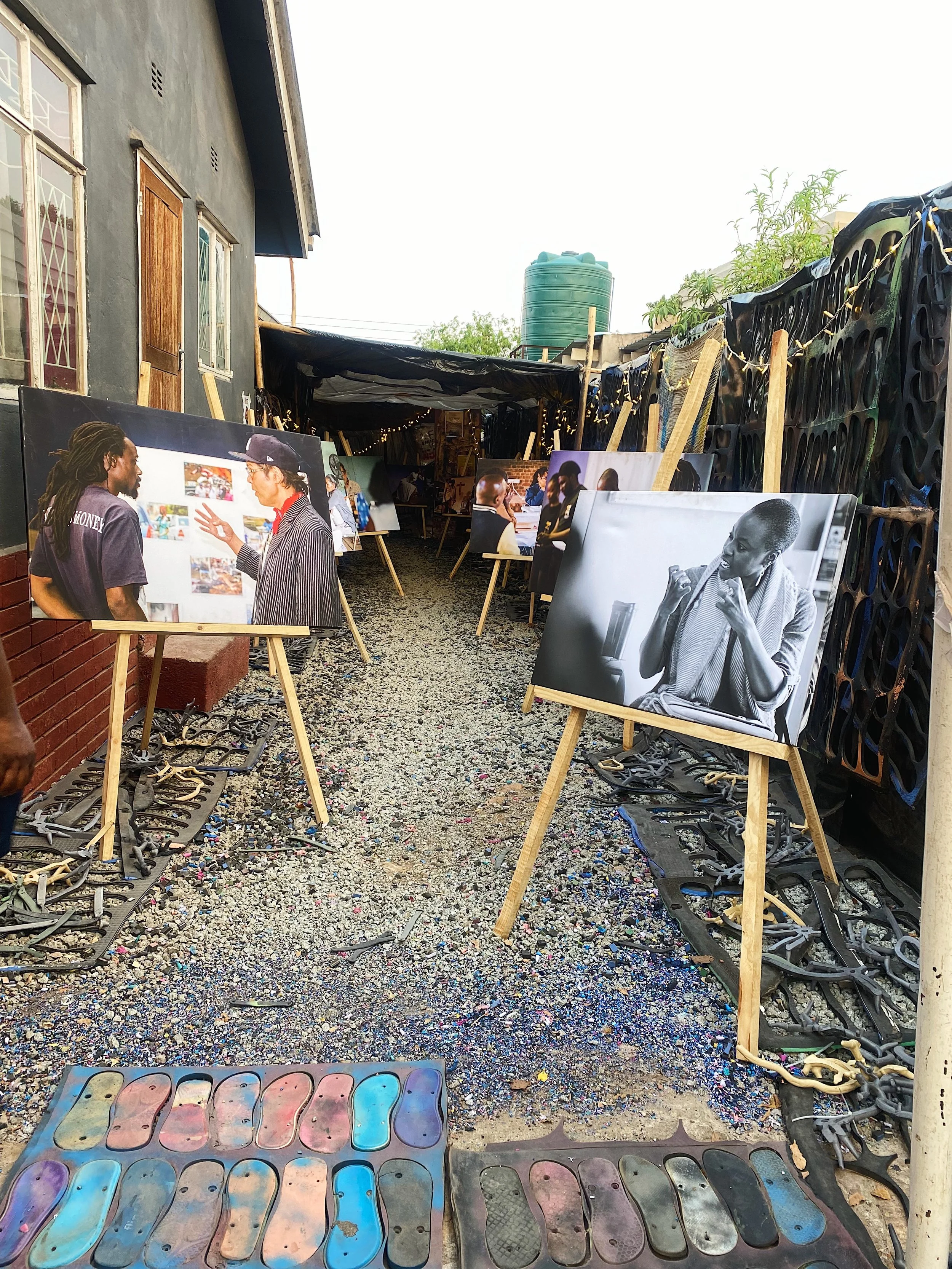
The Africa Voices Now Festival positions itself as a bold platform for Zimbabwean playwrights to interrogate, heal and imagine anew. And honestly? The playwrights did exactly that - and a little bit more.
Having attended many plays at Theatre in the Park and Jasen Mphepo Little Theatre, I love the direction our local theatre is taking. There is a noticeable shift towards braver scripts, uncomfortable truths and stories rooted in everyday realities. Theatre is becoming less about spectacle and more about conversation. About who we are, what we carry and what we are afraid to confront.
“Theatre remains one of the few spaces where audiences are invited to sit with discomfort, contradiction and recognition. Without the distraction of spectacle or easy resolution.”
Now, the plays. All three. All brilliant.
Across all three productions, the performances were marked by strong technical discipline as much as emotional depth. Voice projection was consistently clear, allowing dialogue to land even during quieter, more intimate scenes. Physical movement was deliberate rather than excessive. The actors demonstrated a keen awareness of audience presence, holding attention through pacing, stillness and controlled intensity - rather than spectacle alone.
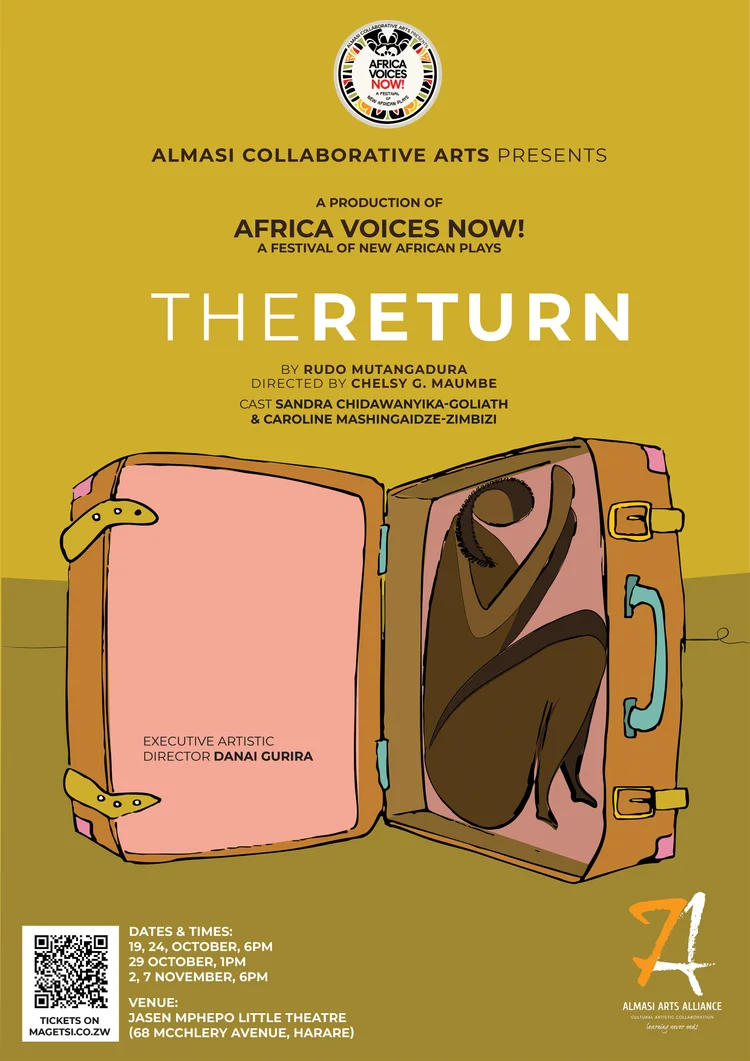
The Return by Rudo Mutangadura
Starring Sandra Chidawanyika-Goaliath and Caroline Mashingaidze-Zimbizi
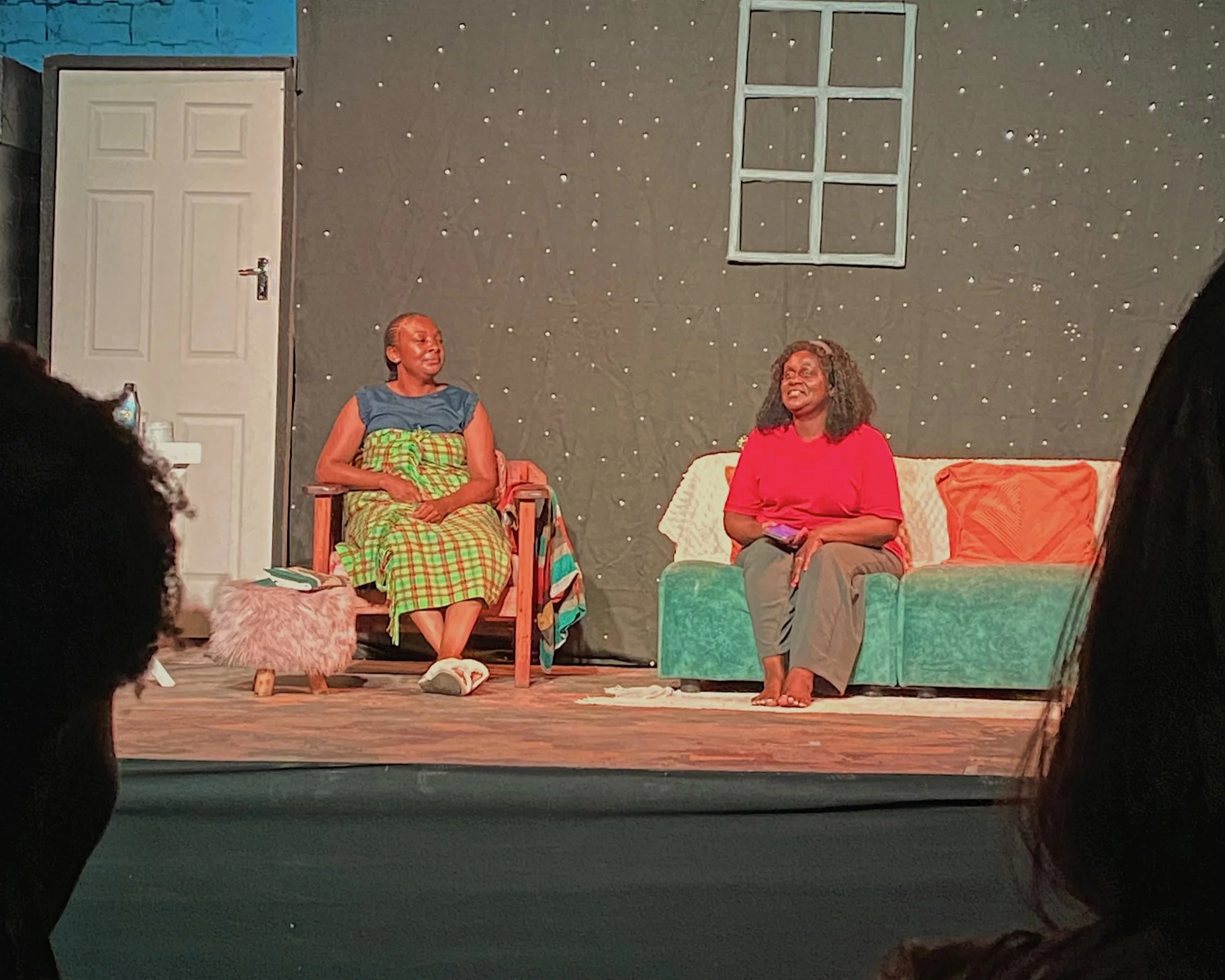
The Return (2025). © Harare Book Club
Wow.
This was a stunning two-woman production, with Caroline Mashingaidze-Zimbizi skilfully juggling a double role. The play interrogates the emotional and financial expectations imposed upon migrants by imposed by family structures and social obligations.
The story cuts deep due to its truth:
Families sacrifice everything to send one person abroad
Those who leave carry the weight of responsibility
Those who stay often assume their sibling overseas is swimming in money
Ageing parents complicate matters further - should they also migrate to make things easier for everyone?
The Return tenderly exposes the guilt, the unspoken resentment, the invisible labour of caregiving, the envy, the duty, the love. It reminded me of conversations many Zimbabwean families have but never fully resolve. The play was honest without being preachy. Plainly showing the realities of migration and the messy, tangled web of family expectations.
These Humans Are Sick by Tatenda Mutyambizi
Starring Michael Kudakwashe, Dalma Chiwereva, Ronald Sigeca, Tinevimbo Chimbetete and Chiedza Matabuka
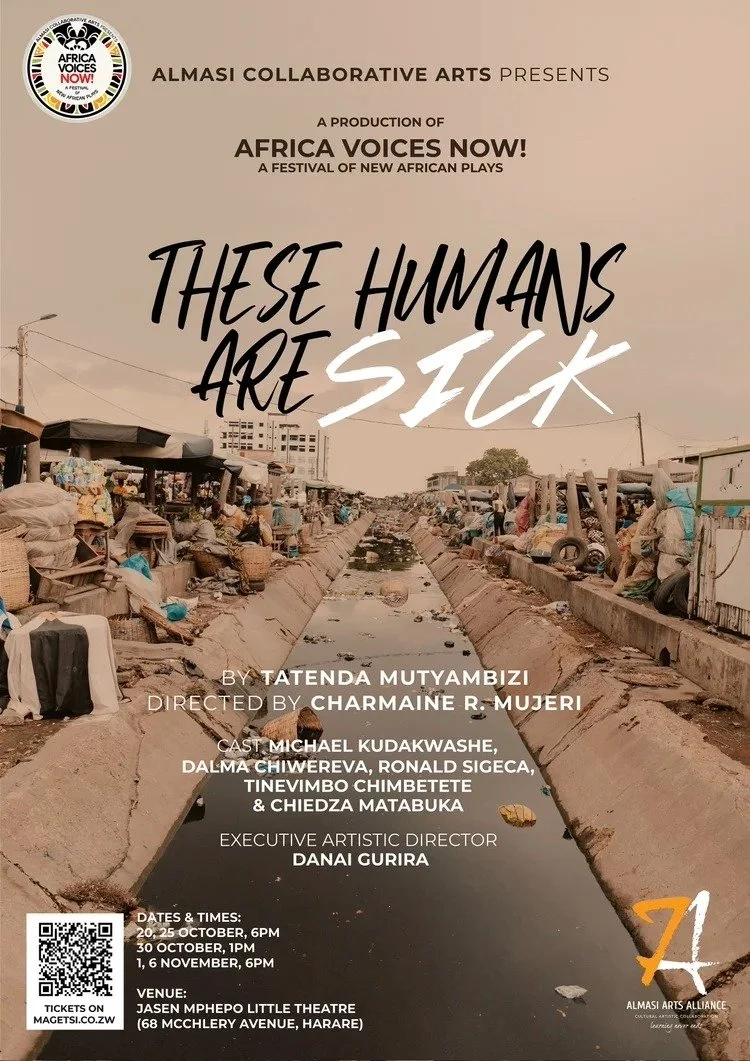
Another wow.
The set design alone deserves its own applause. Bold, disruptive and instantly immersive. The stage was constructed from representations of everyday waste - scattered litter, disposable nappies, discarded condoms and simulated sewage running through the space. None of it was gratuitous; instead, it functioned as a stark visual metaphor for the environments many of our communities navigate daily.
The effect was deliberately instantly uncomfortable - forcing the audience to confront neglect, decay and collective responsibility, before a single line was spoken. By placing this reality at the centre of the stage, These Humans Are Sick, refused aesthetic distance, insisting that social collapse is not abstract, but lived.
Even though I had been in the theatre the previous night, the deliberate use of space, lighting and performance made the venue feel entirely different - almost unfamiliar.
This play dives straight into the social and economic chaos many young people are living through: intergenerational love affairs, transactional arrangements, the desperation to “make it”, and the hunger for shortcuts and survival mechanisms. All laid bare with sharp humour and uncomfortable truth.
One of my biggest takeaways was the reminder that it is not only young women seeking financial support from older partners. Young men, too, are looking for ‘sugar mummies’ to help them climb their financial ladders. And the funny-but-not-funny twist? Sometimes the sugar mummy is married to the same man who is a sugar daddy to someone else’s daughter.
The whole ecosystem is a mess. These Humans Are Sick holds up a mirror to all of us.
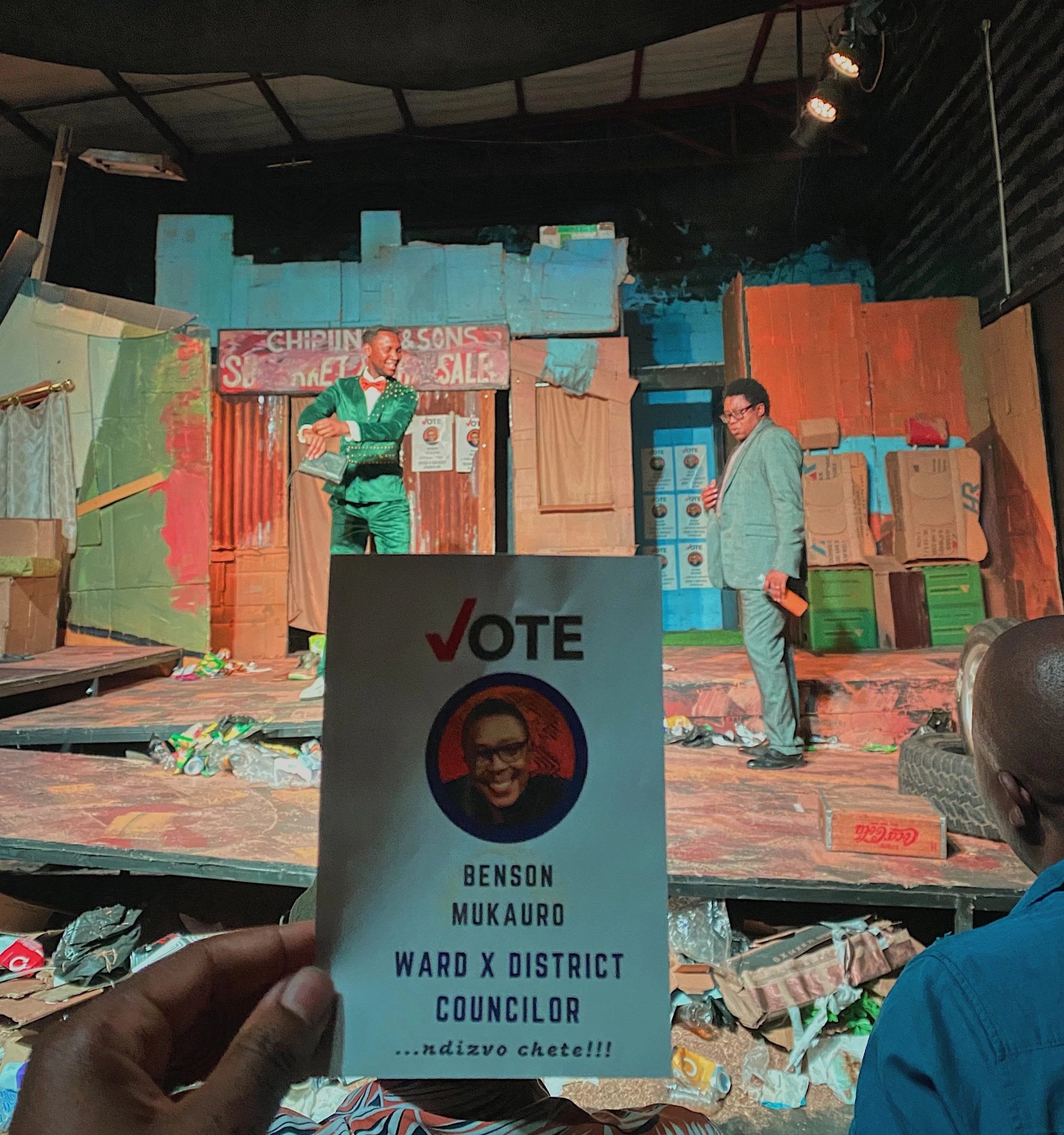
These Humans Are Sick (2025). © Harare Book Club
Can We Talk? by Batsirai Chigama
Starring Joanne C. Tenga, Buhlebenkosi Chinhara, Munashe Goromonzi, Catherine Douglas and Nasibo
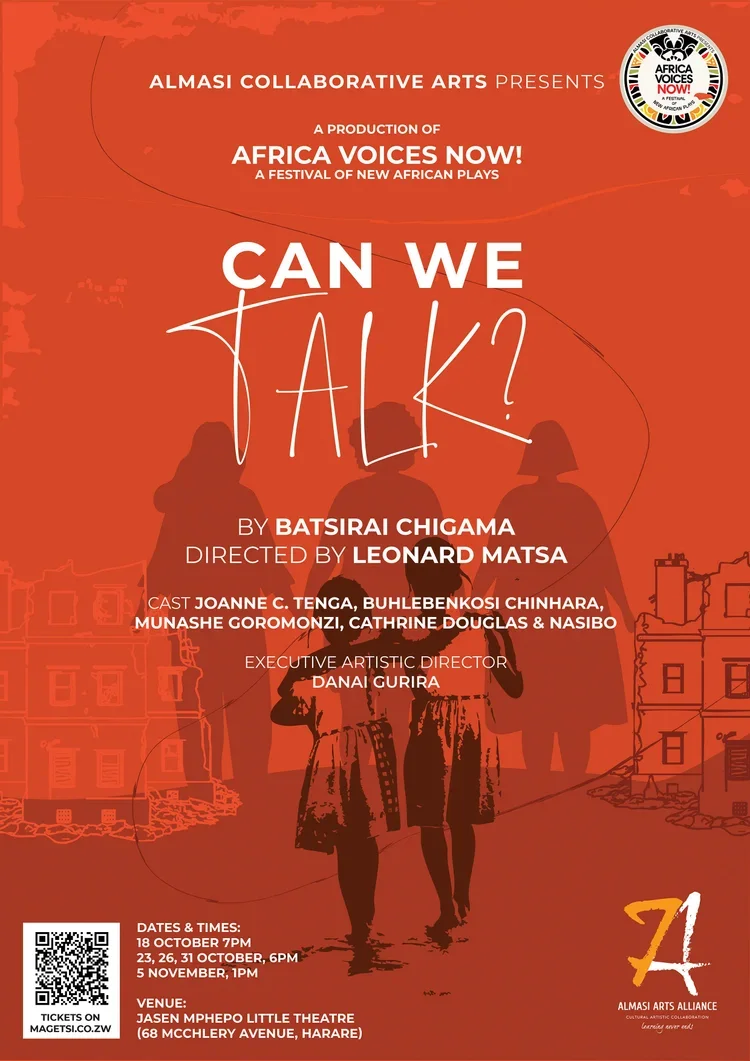
Double wow. Deeply emotional and triggering in a beautiful, necessary way.
Having attended the reading last year, I already admired the script. Experiencing it fully realised on stage revealed an entirely new emotional depth.
This play sits with the heavy things we bury:
The anger women carry in silence
Bitterness passed down through generations. Carried quietly through families in the form of unspoken resentment, blame, and emotional distance. Often without anyone naming its source,
Family secrets that rot in the dark
Wounds that remain unspoken until they overwhelm those affected.
It is a difficult play because it feels uncomfortably familiar. Can We Talk? unfolds around a family gathered in mourning, where the death of an elder sister becomes the catalyst for long-buried truths. As preparations for the burial stall under strange and symbolic circumstances - unresolved trauma, silence and denial, surface among those left behind. What initially appears to be a story about grief gradually reveals itself as an examination of how families protect secrets and the devastating cost of that safeguarding.
Yet the staging, the performances and the emotional truthfulness worked together to create something deeply healing and unsettling. The kind of production you think about long after leaving the theatre.
Festival Highlights
I absolutely loved was the timekeeping. Every play started on time at 6pm on the dot. Audiences were ushered in, waiting-list tickets handled efficiently and once the doors closed movement was limited. It reminded me of the Harare International Festival of the Arts (HIFA): organised, professional, respectful of both performers and audiences.
Many creative platforms can learn from this.
Despite the success of the Africa Voices Now Festival, local theatre does not receive the support it deserves. Not because the productions aren’t good, but because many people simply do not know these spaces exist. Every time I attend a play and post a short clip on Instagram or WhatsApp, I almost always receive the same questions:
‘Where is this?’
‘Is there a schedule?’
‘How do I attend?’
Without fail, a few friends attend the next show with me. This makes me question whether the issue is truly poor advertising, or whether it is about who theatre marketing currently targets. While most theatres share information consistently through their social media pages and mailing lists, this circulation tends to remain within existing theatre-loving circles.
Perhaps what is needed is not more information, but broader outreach. By target audience, I mean people who do not already identify as ‘theatre people’. This could be young professionals, students, first-time attendees, and audiences who consume culture primarily through digital and visual platforms. When theatre remains coded as elite, intellectual or reserved for a particular social group, it risks being unintentionally gatekept, even without malicious intent.
I have felt this gatekeeping personally. During Can We Talk? by Batsirai Chigama - the final play I attended at the festival. I sat at the back of the theatre for the first time. As I took my usual one-minute clip, the kind I often share to introduce new audiences to local theatre, the person seated next to me quietly mentioned that filming was not allowed due to copyright… Copyright?… Was this announced?…Was it written anywhere?
I did not argue, largely because I did not want to disrupt my own experience of the performance. However, the exchange left me reflecting on how such policies are communicated. I was unable to establish whether the person who raised the concern was a member of staff or a fellow audience member, which in itself points to the need for clearer, more consistent guidance.
Piracy is a legitimate concern for theatre practitioners, understandably the distinction between documenting short promotional clips and filming an entire production can be difficult to discern in the moment. This is precisely why clarity matters. When filming restrictions are not formally announced or visibly communicated, enforcement can feel selective. Even when intentions are protective. In an era where visibility is currency, brief, clearly defined guidelines can help balance artistic protection with the audience’s role in discovering and sharing live performance.
Final Reflections
The Africa Voices Now Festival reminded me why I keep showing up for Zimbabwean theatre. Our stories are rich, layered, painful, funny, and necessary. Our actors are brilliant. Our playwrights are bold. Our productions are evolving - experimenting with form, tackling difficult themes, and using satire, spoken word, minimalism, and symbolism with confidence. Theatre remains one of the few spaces where audiences are invited to sit with discomfort, contradiction, and recognition, without the distraction of spectacle or easy resolution.
And perhaps, one day, when more people know these spaces exist, these venues will always be filled in the way our talent deserves.
Written by - Tinashe Madamombe